Seasoning the pan
12 posts
• Page 1 of 2 • 1, 2
Seasoning the pan
 by taurenshaman » Wed Jan 07, 2026 9:59 pm
It should be possible to add spices to cooking utensils so some of flavour is added to food. For example season the pan with 1kg salt would increase salt content of every cooked food by 100%.
- taurenshaman
- Posts: 60
- Joined: Tue Dec 30, 2025 9:04 am
-

azrid - Posts: 3639
- Joined: Mon Oct 17, 2011 11:33 pm
Re: Seasoning the pan
by Detharon » Thu Jan 08, 2026 6:30 am
It makes no sense. You don't salt frying pan in real life, do you?
Gameplay wise it would just make all pan recipes op.
Gameplay wise it would just make all pan recipes op.
- Detharon
- Posts: 111
- Joined: Sat Mar 26, 2011 2:16 pm
Re: Seasoning the pan
by taurenshaman » Thu Jan 08, 2026 6:45 am
It does make sense look
https://youtu.be/02tRxM_1VsE?si=oJQr2FrJnT3GZ9__
https://youtu.be/02tRxM_1VsE?si=oJQr2FrJnT3GZ9__
- taurenshaman
- Posts: 60
- Joined: Tue Dec 30, 2025 9:04 am
Re: Seasoning the pan
by pawnchito » Thu Jan 08, 2026 7:12 am
the video you linked doesnt salt the pan they salt the meat. you oil the pan. this doesnt even pass the sniff test.
-

pawnchito - Posts: 1120
- Joined: Sat Apr 07, 2018 11:52 pm
Re: Seasoning the pan
by azrid » Thu Jan 08, 2026 7:48 am
just so you know for the future "seasoning the pan" means creating a layer of oil polymers by heating it to a high enough temperature
please don't crash out because I corrected you
please don't crash out because I corrected you


-
azrid - Posts: 3639
- Joined: Mon Oct 17, 2011 11:33 pm
Re: Seasoning the pan
by taurenshaman » Thu Jan 08, 2026 9:36 am
azrid wrote:just so you know for the future "seasoning the pan" means creating a layer of oil polymers by heating it to a high enough temperature
please don't crash out because I corrected you
Have you ever heard the term polysemy?
- taurenshaman
- Posts: 60
- Joined: Tue Dec 30, 2025 9:04 am
Re: Seasoning the pan
by stya » Thu Jan 08, 2026 10:32 am
We need a video where they put 1kg of salt in a pan and then proceed to cook a steak in it. For science!

-

stya - Posts: 1036
- Joined: Wed May 21, 2014 3:13 pm
Re: Seasoning the pan
by azrid » Thu Jan 08, 2026 2:12 pm
Ive seen a video of 1kg of salt being put on a fish and then cooked
-
azrid - Posts: 3639
- Joined: Mon Oct 17, 2011 11:33 pm
Re: Seasoning the pan
by sMartins » Thu Jan 08, 2026 2:53 pm
Oh, my poor culinary illiterates, sMartins is here to clear things up for you... it's me, Mario!
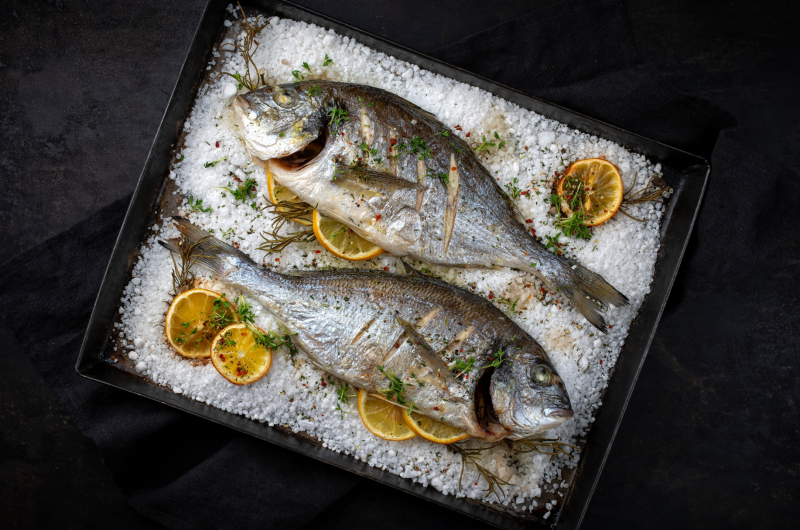
This photo is purely for aesthetic purposes, or probably before being covered; in reality, it should be completely covered in salt, which is why it does not make sense to use a pan,
as the heat must come from all directions. An oven is ideal.
Of course, salt baking exists, but first of all, it is used almost exclusively in the oven, and secondly, even though it can be used for just about anything, meat, fish, vegetables... it is much more common for fish, at least here where I live. This is because you need a protective layer to act as a barrier between the food and the salt, in this case the skin of the whole fish.
A brief explanation of AI for my convenience, don't worry, certified by sMartins!
Salt-crust cooking creates a sealed thermal chamber where food steams in its own juices, ensuring incredible tenderness without added fats. To prevent over-salting, it is essential to use a natural barrier like fish scales, poultry skin, or vegetable peels, which protects the flesh while the salt traps heat and aromas. This simple yet effective method is perfect for whole fish, lean meats, and root vegetables, delivering a healthy and intensely flavorful result.

This is a ‘more realistic’ photograph.
Yes, the hammer is no joke. It may be a bit of an exaggeration, but the crust that forms during cooking, combined with the steam and juices from the food, becomes very hard, almost like cement, so for convenience, you can even use a small hammer.
This photo is purely for aesthetic purposes, or probably before being covered; in reality, it should be completely covered in salt, which is why it does not make sense to use a pan,
as the heat must come from all directions. An oven is ideal.
Of course, salt baking exists, but first of all, it is used almost exclusively in the oven, and secondly, even though it can be used for just about anything, meat, fish, vegetables... it is much more common for fish, at least here where I live. This is because you need a protective layer to act as a barrier between the food and the salt, in this case the skin of the whole fish.
A brief explanation of AI for my convenience, don't worry, certified by sMartins!
Salt-crust cooking creates a sealed thermal chamber where food steams in its own juices, ensuring incredible tenderness without added fats. To prevent over-salting, it is essential to use a natural barrier like fish scales, poultry skin, or vegetable peels, which protects the flesh while the salt traps heat and aromas. This simple yet effective method is perfect for whole fish, lean meats, and root vegetables, delivering a healthy and intensely flavorful result.
This is a ‘more realistic’ photograph.
Yes, the hammer is no joke. It may be a bit of an exaggeration, but the crust that forms during cooking, combined with the steam and juices from the food, becomes very hard, almost like cement, so for convenience, you can even use a small hammer.
Make friends with the other crabs or try to escape the bucket.
I'd hardly call anything the Bible of our times. » special thanks to MagicManICT
I only logged in to say this sentence. by neeco » 30 Oct 2018, 02:57
Default Client, Best Client!
I'd hardly call anything the Bible of our times. » special thanks to MagicManICT
I only logged in to say this sentence. by neeco » 30 Oct 2018, 02:57
Default Client, Best Client!
-

sMartins - Posts: 3435
- Joined: Wed Nov 11, 2015 10:21 pm
- Location: Italy
12 posts
• Page 1 of 2 • 1, 2
Who is online
Users browsing this forum: Claude [Bot], MightySheep, Sorchy21, vatas

Powered by phpBB © 2000, 2002, 2005, 2007 phpBB Group