Container Rack
Idea:
A rack that can hold boxes, baskets, and chests and retrieve items without removing the containers themselves.
4 x 1 (2 shelves). The shelf length is 3.6 (a multiple of 0.6 and 0.8, the sizes of most containers).
The bottom shelf is slightly above the ground.
The top shelf is at the height of the largest container with the lid open—just enough to visually allow enough space to reach items without removing the containers.
Possible implementation:
- Divide the shelf length into 0.3-unit cells. When a container is placed on the shelf, as many cells as needed are used to fit the container without leaving any "leftovers."
0.5; 0.6 - 2 cells of 0.3, 0.7; 0.8; 0.9 - 3, 1.0 - 4, 1.3; 1.5 - 5.
- It's desirable for the container to be centered in the space it uses, leaving unused space on the sides, leaving gaps between containers or the side wall for a better visual appearance.
- There are two options for horizontal placement and on which shelf:
1) Depending on the cursor position, it is considered the center of the container, and the cells closest to it are used in the required number.
2) A separate interface that opens when you click on the side walls. It is divided into two parts, each divided into 12 cells (0.3). After placing a container in the rack, its icon appears inside, occupying as many cells as it occupies on the shelf and on the cells it occupies. Within the interface, you can move it up, down, left, or right to the desired location.
Reason:
- This will allow you to use a wider variety of boxes, baskets, and chests for storage, more efficiently and as an alternative to cabinets.
- The ability to stack different combinations of containers on a rack will add more variety and originality to your storage spaces (which, by the feel of it, is 99% of spaces).
- Easy storage and accessibility in separate containers without sacrificing the number of storage slots per square meter.
Materials and appearance:
Metal side shelves and wooden shelves. This will allow for a wider variety of appearances.
Wood-on-wood or metal-on-metal combinations are also possible.
Container Rack
10 posts
• Page 1 of 1
Container Rack
 by serVar161 » Wed May 06, 2026 10:41 pm
You do not have the required permissions to view the files attached to this post.
My english is bEd.
-

serVar161 - Posts: 550
- Joined: Mon Feb 23, 2026 10:55 am
Re: Container Rack
by Frogg » Thu May 07, 2026 12:34 am
They could simply make Cupboards hold more items to achieve the same effect. It's a game. They could give the Wicker Basket infinite inventory slots if they wanted to.
Container Racks would be overpowered.

Container Racks would be overpowered.
- Frogg
- Posts: 119
- Joined: Thu Feb 12, 2026 12:26 am
Re: Container Rack
by serVar161 » Thu May 07, 2026 1:44 am
Frogg wrote:They could simply make Cupboards hold more items to achieve the same effect. It's a game. They could give the Wicker Basket infinite inventory slots if they wanted to.
Container Racks would be overpowered.
Why? They take up four spaces. You can't place them anywhere. In terms of the number of slots per space, it's about the same as cabinets, unless you only put chests in them.
You don't want to waste one space on a basket, but if you can place them on different shelves, the space is not so wasted, and you can sacrifice slots for the sake of beauty and variety.
Furthermore, even considering the different textures, you enter any room and see cabinets, cabinets, and cabinets. Shelves with various containers, which you can combine in any order, can change this look. And with cabinets and other furniture, there's even more variety.
There are lots of different chairs and chests, but only 2.5 pieces of storage furniture – wooden, metal cabinets, and a shelf.
My english is bEd.
-
serVar161 - Posts: 550
- Joined: Mon Feb 23, 2026 10:55 am
Re: Container Rack
by serVar161 » Thu May 07, 2026 2:30 am
A container rack would become too powerful if:
1) You stack two rows of Exquisite Chests on it.
Then the rack would have twice as many slots as four cabinets, which take up the same amount of space.
But this raises a question about the chest itself: why, despite its smaller size, does it have the same number of slots as a cabinet?
Perhaps it's designed to be used instead of cabinets, without worrying about the slots.
This can be solved by simply not adding it to the list of containers that can be placed on the rack. "Too heavy."
2) Or by stacking a Jotun Clam.
But that's an exception. And again, it can be banned. Although I wouldn't.
In other cases, you get a maximum of +8 slots per tile. One row. A minor bonus in exchange for taking up four tiles.
And can be easily balanced by changing the rack's slot size from 0.3 to a larger one to reduce the number of containers per row.
1) You stack two rows of Exquisite Chests on it.
Then the rack would have twice as many slots as four cabinets, which take up the same amount of space.
But this raises a question about the chest itself: why, despite its smaller size, does it have the same number of slots as a cabinet?
Perhaps it's designed to be used instead of cabinets, without worrying about the slots.
This can be solved by simply not adding it to the list of containers that can be placed on the rack. "Too heavy."
2) Or by stacking a Jotun Clam.
But that's an exception. And again, it can be banned. Although I wouldn't.
In other cases, you get a maximum of +8 slots per tile. One row. A minor bonus in exchange for taking up four tiles.
And can be easily balanced by changing the rack's slot size from 0.3 to a larger one to reduce the number of containers per row.
My english is bEd.
-
serVar161 - Posts: 550
- Joined: Mon Feb 23, 2026 10:55 am
Re: Container Rack
by Frogg » Thu May 07, 2026 4:40 am
Building your first house and filling it with Cupboards feels nice. It's such an iconic Haven&Heath moment. I don't want them to mess with that by introducing more containers that are better than the existing ones.
I didn't fully understand your idea tbh
+1 if Container Racks don't mess the storage per tile meta
-1 if they are mandatory to build
Either way I don't think we have the technology (yet) to open containers that are inside another structure.
I didn't fully understand your idea tbh
+1 if Container Racks don't mess the storage per tile meta
-1 if they are mandatory to build
Either way I don't think we have the technology (yet) to open containers that are inside another structure.
- Frogg
- Posts: 119
- Joined: Thu Feb 12, 2026 12:26 am
Re: Container Rack
by serVar161 » Thu May 07, 2026 12:13 pm
Frogg wrote:Building your first house and filling it with Cupboards feels nice. It's such an iconic Haven&Heath moment. I don't want them to mess with that by introducing more containers that are better than the existing ones.
I didn't fully understand your idea tbh
+1 if Container Racks don't mess the storage per tile meta
-1 if they are mandatory to build
I see. The goal isn't to replace cabinets, but to avoid having just cabinets and to ensure the remaining containers are used equally.
Most are used initially, but then they fall into disuse because they lack the number of slots per square meter compared to others. And even then, they're mostly used outdoors, because wooden cabinets break down outdoors. A container rack will increase their efficiency—the number of slots per meter—and make their use more acceptable.
For example, wooden Crate and Linen Crates. They take up one and a half squares and hold 15/20 slots. Taking up three squares gives us 30/40 slots. Compared to three wooden cabinets, that's 192 slots. 5-6 times fewer. Too many. But if they're stacked in two rows, that's 60/80, and 2-3 times fewer slots. Still a lot, but acceptable.
For the sake of variety, beauty, and accessibility, you can sacrifice some slots. The same goes for the other containers.
But imagine a shelf with, say, two Crates and a Wooden Box underneath (to save shelf space) and baskets on top. Next to that, a shelf with various chests. By using different containers and their placement, you can create unique combinations that will look good, be efficient in slots, and be easy to use.
My english is bEd.
-
serVar161 - Posts: 550
- Joined: Mon Feb 23, 2026 10:55 am
Re: Container Rack
by serVar161 » Thu May 07, 2026 1:21 pm
Frogg wrote:Either way I don't think we have the technology (yet) to open containers that are inside another structure.
There's a cheese rack, with different shelves and a filter for the items that can be placed inside.
There's a garden house where you can place objects and there's an interface for that.
There's a table where, depending on where an object is placed within the interface, it appears in the same place on the table.
Basically, as you said, there's no way to open an object that's inside another structure.
But what about a Gridiron installed on a campfire or brazier?
It's an object that's inside another structure, and its interface can be opened.
And the campfire interface can be opened. That gives us two levels.
This might not be exactly the same, but with all the existing mechanics in the game, creating a rack that can hold containers and open their interface without removing them from the rack doesn't seem like an impossible task for the developers.
My english is bEd.
-
serVar161 - Posts: 550
- Joined: Mon Feb 23, 2026 10:55 am
Re: Container Rack
by Regulus2424 » Thu May 07, 2026 1:34 pm

W6 - giga noob hermit
W7 - giga noob hermit, part 2
W12 - hermit
W13 - sprucecap extraordinaire from Magnanimous Magistrates
W14 - PotFriendJr from Doom Fortress
W15 - He Who Was from Gnomes Gone Gangsta
W16 - Marazhai from Wildfox Bread/Hogwarts
W16.1 - Knave from Pimp My Wheelchair
W16.2 - Knave-Errant from Ett gäng dumma smileys
W7 - giga noob hermit, part 2
W12 - hermit
W13 - sprucecap extraordinaire from Magnanimous Magistrates
W14 - PotFriendJr from Doom Fortress
W15 - He Who Was from Gnomes Gone Gangsta
W16 - Marazhai from Wildfox Bread/Hogwarts
W16.1 - Knave from Pimp My Wheelchair
W16.2 - Knave-Errant from Ett gäng dumma smileys
-

Regulus2424 - Posts: 639
- Joined: Mon Feb 16, 2015 3:48 pm
-

lordgrunt - Posts: 440
- Joined: Sat Nov 05, 2011 11:49 pm
Re: Container Rack
by serVar161 » Thu May 07, 2026 2:34 pm
lordgrunt wrote:why not dream big
Why not? Here's a suggestion. Perhaps there were similar topics somewhere else. And I'm all for it.
But a cooking station is a bit different and is strictly food-related.
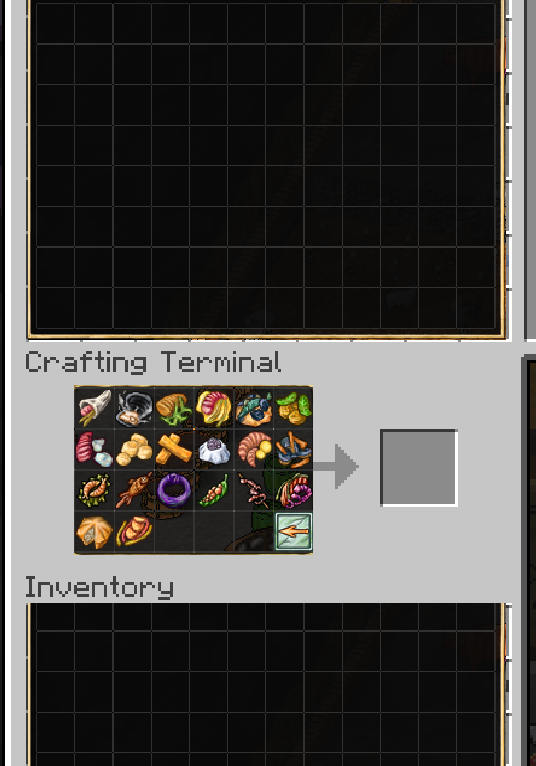
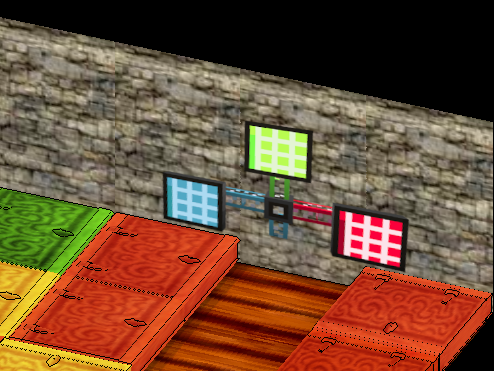
The idea behind the shelving is to use more diverse containers and to diversify storage areas with furniture other than cabinets.
This could be used for convenient crafting, including cooking, but the concept also includes other purposes.
My english is bEd.
-
serVar161 - Posts: 550
- Joined: Mon Feb 23, 2026 10:55 am
10 posts
• Page 1 of 1
Who is online
Users browsing this forum: Ahrefs [Bot], Amazon [Bot], Claude [Bot], Dotbot [Bot]

Powered by phpBB © 2000, 2002, 2005, 2007 phpBB Group